
Why We Design Solar Systems for June, Not January
“Your proposal says you'll generate 14,000kWh a year."
Great.
Now tell me what happens in June.
Because that's when people find out whether their solar system was actually designed well.
The Problem With Almost Every Solar Proposal
If you've collected a few solar quotes, you've probably noticed they all lead with the same impressive-looking number.
Annual generation.
12,400kWh.
13,800kWh.
15,100kWh.
It's treated like the headline statistic, as though the bigger the number, the better the system.
And while annual generation is important...
...it's not the number we look at first.
We look at June.
Because nobody rings us in January complaining their solar system is generating too much electricity.
But sometimes the message us in winter.
The Roof That Looked Fine... Until Winter
Recently I was designing a system for a beautiful home with two possible roof faces.
Both looked perfectly reasonable.
Both could physically fit the panels.
So we ran the numbers.
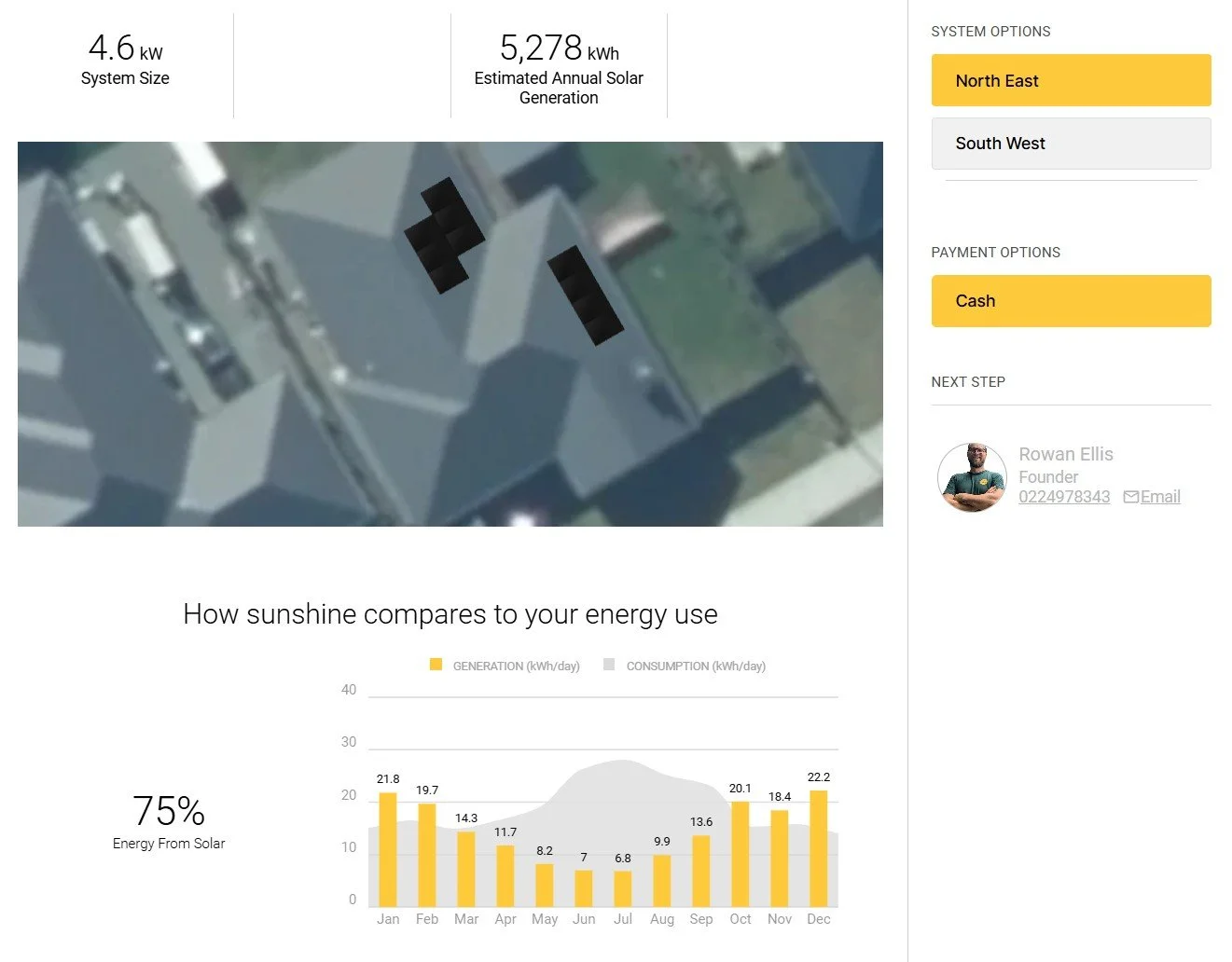
I placed ten panels on the north-east roof.
Annual generation?
Just over 5,000kWh.
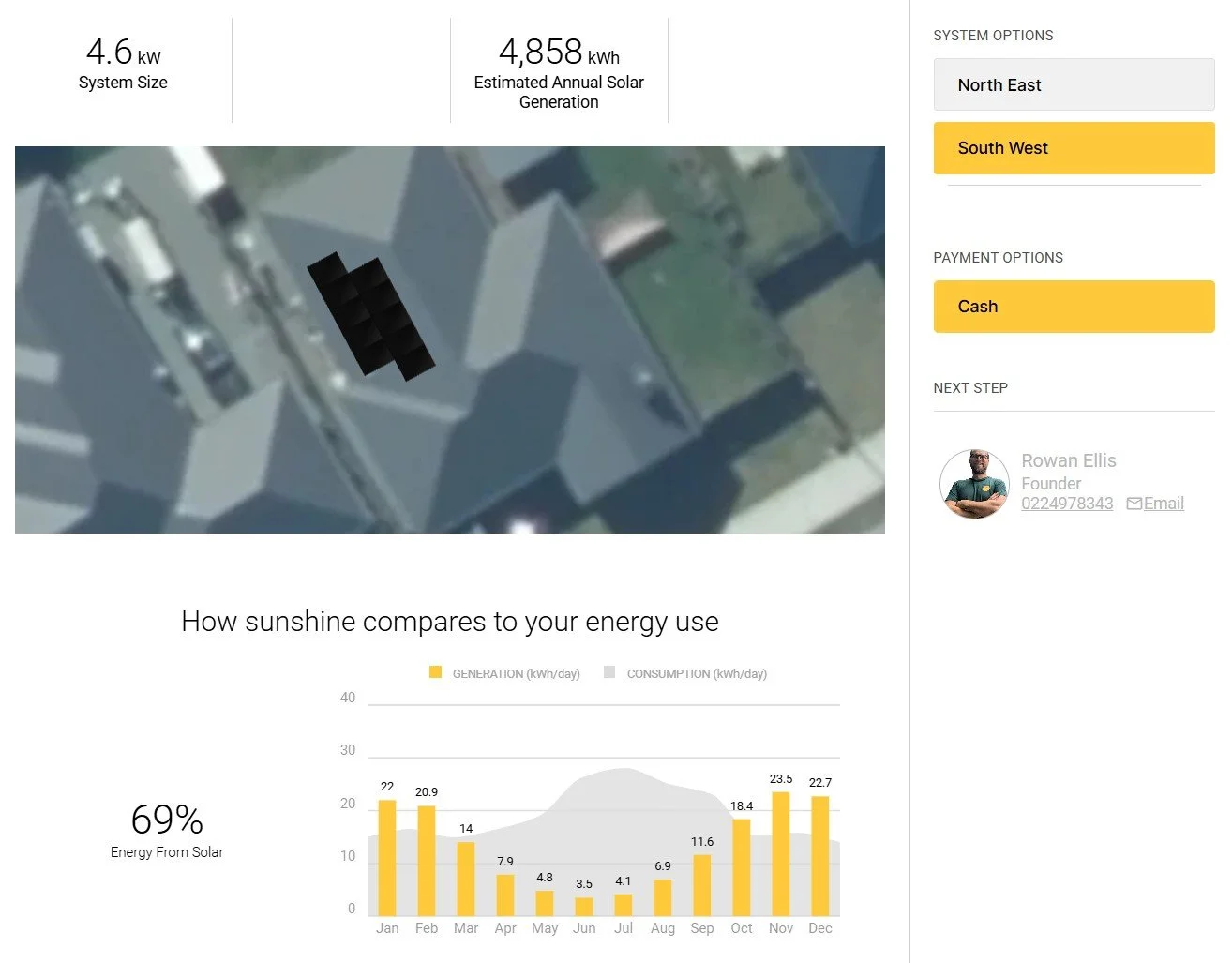
Then I moved those same tend panels onto another the south west face.
Annual generation dropped to around 4,800kWh.
About 15% less generation, annually.
Interesting...
But that's not the part that mattered.
Because the client cringed when we zoomed in on June.
The north-east roof generated around 7kWh per day.
The other roof?
Just 3.5kWh per day.
Same ten panels.
Same house.
HALF the generation.
Completely different outcome when it matters.
That's why annual generation can be a surprisingly misleading number.
Winter Is When Solar Gets Tested
Anyone can make a solar proposal look good in summer.
Long days.
High sun.
Plenty of generation.
But winter is different.
The sun sits lower.
The days are shorter.
Shadows matter more.
Roof orientation matters more.
Panel placement matters more.
If your system has been designed purely to maximise an annual number, you can end up disappointed during the months that actually matter.
We Don't Optimise for the Best Month.
We Optimise for the Worst One.
This is one of the biggest differences in how we approach system design.
We're not trying to produce the prettiest proposal.
We're trying to produce the best investment.
That means asking questions like:
Which roof keeps generating in June?
Will this family add a heat pump next year?
Are they planning to replace gas hot water?
Will they buy an EV?
Does this roof suffer from winter shading?
Is there a better roof face, even if it generates slightly less over a full year?
Good Solar Design Isn't About Filling a Roof
It's about understanding how a home actually uses electricity.
It's about knowing where the sun is in June.
It's about understanding future power usage, roof orientation, shading, electricity tariffs and panel placement.
This is the work we do, with you - long before procuring solar quotes.
Because comparing quotes only makes sense when everyone is quoting against the ideal system design.
And in our experience...
The right system isn't the one that looks best in January.
It's the one that's still working hard for you in June.
