
Commercial Solar.
Increased profitability using the cheapest and cleanest form of energy.
All businesses make investments, generally to expand their services, and their profitability.
New machinery, products, and services, provide an immediate top line benefit. The bottom line profit tends to come later.
Efficiency is the main reason new operations aren’t immediately profitable. It takes time to ‘get the wheels spinning’, so to speak.
Profit feeds CAPEX investment, or owner dividends.
So businesses should always be asking -
“When will this new investment generate a profit, and how much will that profit be?”
Solar provides savings on your energy bills, which could be compared to the revenue from your next investment.
You put up solar… You see immediate savings.
Undoubtedly, the solar-energy savings would be less than new revenues from new investments.
IE - if a $100k solar investment saves you $20,000 in the first year, that’s probably a lot less than the revenue you might earn from investing $100k into growing your operations.
But with very minimal operating & maintenance costs, most of the energy savings fall to the bottom line.
Solar is basically a bottom line benefit. It’s a bit like the delayed profit you’re aiming for when you reinvest in your own business.
With most commercial solar systems having a payback period under 5 years, the returns are typically upwards of 20%.
How does a 20% profit compare to the expected bottom line return of your next CAPEX opportunity?
CAPEX with external capital.
The payback period will be increased marginally due to interest on the loan, but like some businesses you may view interest as a necessary cost of doing business.
Even after the cost of commercial lending, commercial solar tends to provide returns upwards of 10%.
Does your business have a bottom line profit margin above 10%? If not - consider solar as a means to lift your profitability.
Dealing with banks for business lending may be more difficult than tapping into other forms of outside investment, so bear those factors in mind when planning project timelines.
CAPEX with cash
See immediate cost savings on your energy bills.
Typically, in commercial scenarios, solar systems pay for themselves in about 5 years, providing an ROI of 20%.
Within 15 years, most solar systems pay themselves back three times over. IE; spend $50k and save $150k over 15 years.
There’s a compelling argument that the solar savings as a percentage of the capital cost, could be likened to net profit.
How does a 20% ROI stack up against the rest of your business operations?
OPEX with a Lease / Rental facility
Obtain solar via a zero-down Lease/Rental option. Monthly payments that come into you OPEX budget.
Gain ownership at the end of the term for the equivalent of two monthly payments.
Commonly, the annualised solar savings end up costing less than the monthly payments for the Lease/Rental payment solution.
We model the cashflows, handle the paperwork, and even obtain a credit decision without needing to see your financials. (*No financials required for systems valued under $150k).
Indicative funding options comparison
*These numbers are estimates only, based on industry data available Feb 2025. Each system should be tailored to the unique setup of your operation, location and requirements. We recommend speaking with a Solar Broker for updated recommendations and pricing estimates before making a move on solar.
Commercial lending notes
*The monthly costs associated with commercial lending assume the funder covers the GST payable on the system.
*On the basis of a $50k system + GST, under commercial lending, the client would likely receive a $7,500 GST refund in their next GST return.
Lease to own / Rent to own notes
*Rates are based on the funder calculating the Lease over a 7 year term with an interest rate between 11 - 13%.
The funder covers the initial GST cost, as they are the beneficiary of the GST refund.
The client does not receive any depreciation tax benefits, as the system is depreciated on the funders books.
Solar is the future of green energy.
Solar offers a 30+ year life expectancy on the panels and a 15+ expectancy on the inverter.
Maintenance is affordable as compared to the savings, making rooftop solar the cheapest form of energy.
With energy prices on the rise, heavy handed line fees and excess kVar charges, solar helps you:
Reduce your energy costs.
Decrease total site load during peak hours.
Support NZ’s transition to 100% renewable energy.
Contribute to solving NZ’s commercial electricity supply challenges.
2000+ Hours
Of sunshine each year for most regions in the north island. Some roofs will be better than others, but all of New Zealand can benefit from Solar.
2050
Is the year for New Zealand's Net Zero Emissions target under the climate change response act. Solar ensure you make a meaningful contribution.
20% ROI
Commercial solar systems typically pay for themselves in about 5 years, resulting in an ROI upwards of 20% P.A.
Brand impact
Solar is a marketing tool for your renewable toolbelt.
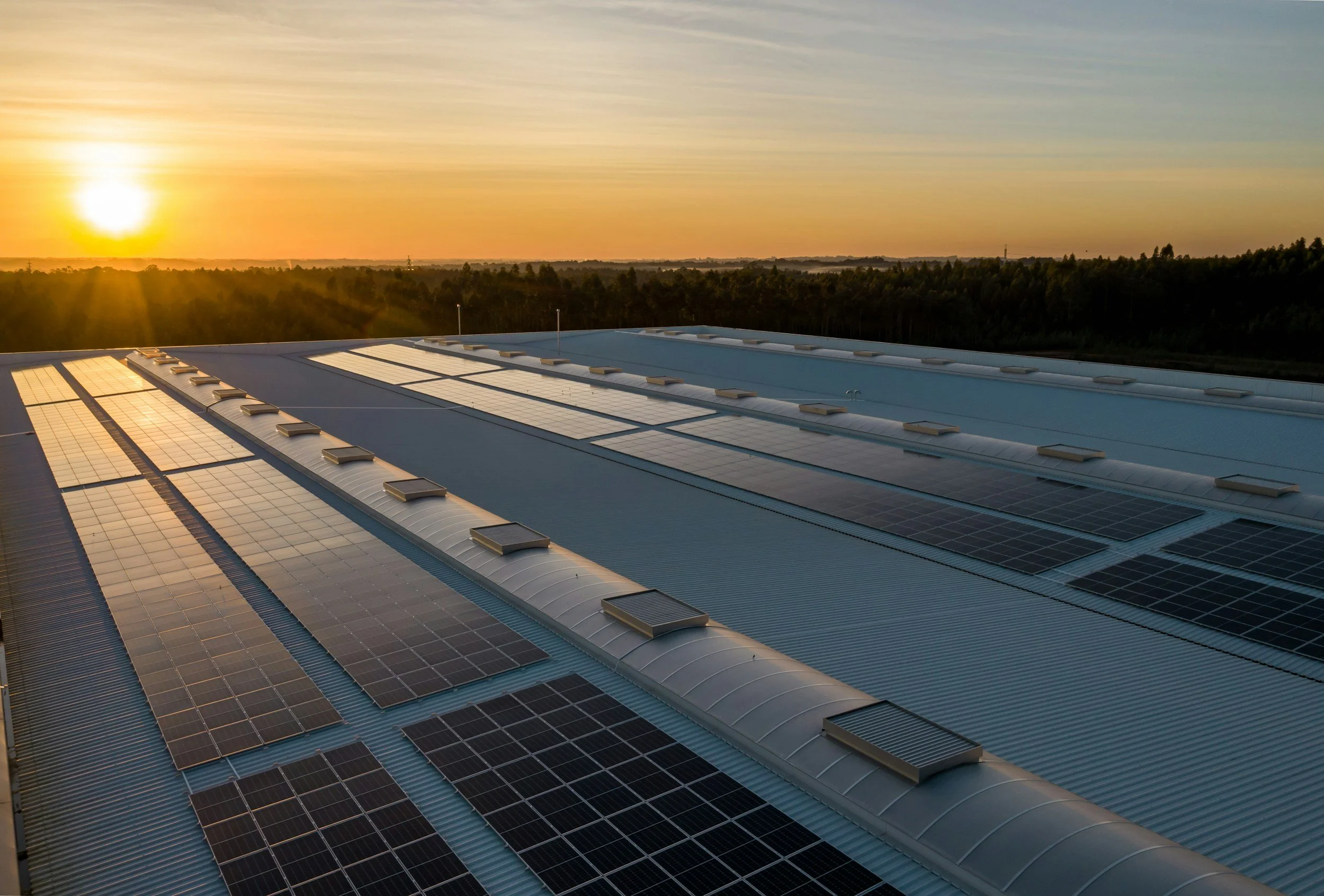
The huge cost of waiting.
Consider this. Take your average monthly energy bill and multiply it by 384. The answer reflects how much your business will spend on energy over the next 25 years, and that’s assuming only 2% inflation. If those figures raises an eyebrow, consider our FREE commercial solar analysis to explore the immense value of an investment in solar for your business
Does solar: Take up space inside your facility? Incur day to day operational costs? Create waste or by byproducts? Take sick days? Get taxed?
There's a lot of upside to going solar. We believe solar is a great investment for many New Zealand businesses and would love to explore the idea with you.

Frequently Asked Questions
-
We keep this private. Our clients know who we work with, but only those who have quoted their system.
-
In most cases, we let open solar handle the savings forecast. It uses conservative assumptions around the on-site consumption of solar.
Residentially, we choose a power usage profile that reflects the customers home after solar.
Most of the time the default 'evening peak' profile is selected. -
The winning solar company pays us a broker fee. We provide a broker-fee calculator, which typically works out the fees to be between 8 - 10% of the system price on residential and 5 - 7% on commercial projects (excluding GST).
-
During the design phase, we will create indicative designs that will need to be assessed by a 3rd party engineering specialist to ensure building specifications are taken into account - they should not be considered final until this assessment is done, and plans altered based on those findings. Usually some adjustments will need to be made depending on system size and the building design.
The Solar Installation Company and Manufacturers (for products under warranty) will provide ongoing support as part of their standard terms of trade. -
Yes, we do. Sometimes the retailer that gives them the highest savings is recommended, but other times it's a retailer with a positive impact on savings and with some other alternative benefits such as locked in rates, joining credits or flexible options offered for large commercial organisations.